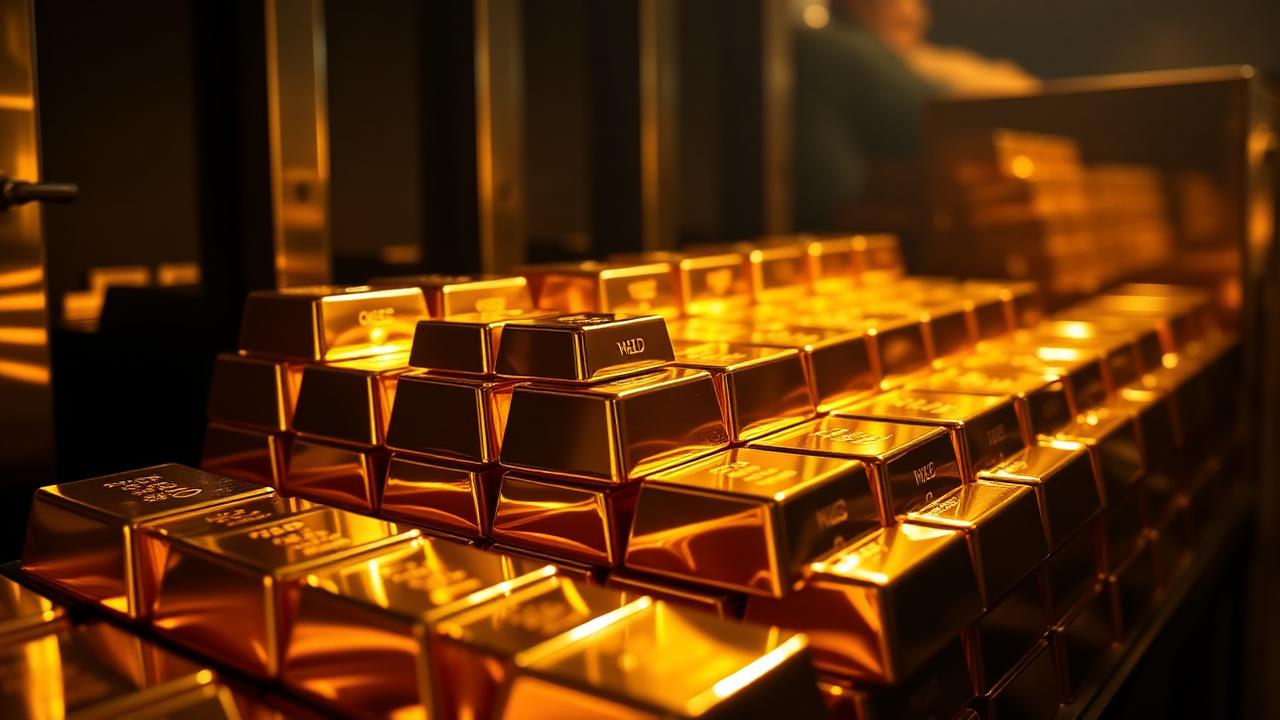
Gold's Record Highs: Is the Rally Sustainable or Due for a Correction?

Key Takeaways
- 1Gold's rally above $4,000/oz is primarily driven by record central bank buying, led by BRICS-aligned nations.
- 2Persistent inflation and heightened geopolitical tensions are fueling strong safe-haven demand from institutional and retail investors.
- 3The current market environment shows strong parallels to the 1970s stagflationary period, which ignited a historic bull market in gold.
- 4Potential risks for a near-term correction include a hawkish pivot by the Federal Reserve and significant profit-taking by traders.
- 5Platinum's persistent and historically large discount to gold may attract value-oriented investors, creating a potential headwind for gold's price.
- 6Analysts suggest the long-term outlook remains constructive as the market reprices gold for its role in a diversifying global financial system.
The financial world has watched as gold prices have climbed a remarkable wall of worry, pushing decisively past the symbolic $4,000 per ounce threshold in 2025 and sustaining those gains into 2026. After years of consolidation, the yellow metal has entered a new phase of price discovery. For investors, the critical question is whether this rally is built on a solid foundation or if it is a speculative fervor due for a sharp correction.
The Forces Driving Gold's Ascent
The current rally is not the result of a single catalyst but a confluence of powerful macroeconomic and geopolitical trends. Chief among them is the unprecedented level of buying from the world's central banks. According to data from the World Gold Council (WGC), central banks have been accumulating gold at a historic pace, with net purchases consistently breaking records over the past few years. This trend is largely driven by emerging market banks, particularly within the BRICS bloc, seeking to diversify their reserves away from the U.S. dollar. This strategic shift, often termed de-dollarization, represents a structural change in the global monetary system, with gold as a primary beneficiary.
Secondly, a persistent backdrop of geopolitical instability has burnished gold's appeal as the ultimate safe-haven asset. Ongoing global tensions, trade disputes, and regional conflicts have created a climate of uncertainty that traditional financial assets cannot easily weather. In such an environment, gold's historical role as a store of value outside of any single government's control becomes paramount.
Finally, macroeconomic headwinds in the developed world continue to provide support. While inflation has cooled from its cycle peaks, it remains stubbornly above the Federal Reserve's target rate. This environment of stagflation—characterized by low economic growth and persistent inflation—erodes the real value of fiat currencies and drives investors toward tangible assets like gold.
Institutional and Retail Demand
It is not just central banks driving prices higher. A notable shift has occurred among institutional investors. Data from the CME shows that managed money traders have significantly increased their net long positions in gold futures, signaling a strong belief in continued upside. Hedge funds and pension funds, which had been underweight in commodities, are now increasing their allocation to gold as a hedge against both inflation and a potential downturn in equity markets.
On the retail side, demand for physical gold, such as coins and bars, remains robust. This is particularly true in Asia, where both Chinese and Indian households have a deep cultural affinity for gold. Data from the Shanghai Gold Exchange (SGE) often shows a significant premium over the London (LBMA) spot price, indicating intense physical demand that sometimes outstrips available supply.
A Historical Analogue: The 1970s Stagflation
The current environment bears a striking resemblance to the 1970s. That decade was marked by the collapse of the Bretton Woods system, two major oil shocks, and runaway inflation in the U.S. In response to this economic turmoil, gold—which had been fixed at $35/oz for decades—was unleashed. From 1971 to January 1980, the price of gold soared to over $850/oz, a gain of more than 2,300%.
Then, as now, the world was grappling with a crisis of confidence in fiat currencies and rising geopolitical risk. The parallels suggest that the current gold rally may not be a short-term event but part of a longer-term bull market. While history does not repeat exactly, the 1970s provides a powerful analogue for how gold can perform during periods of profound economic change.
Counterarguments: The Case for a Correction
No asset moves up in a straight line, and it is crucial to acknowledge the risks. The rapid pace of the recent ascent has left gold technically overbought in the short term, which could invite profit-taking from traders. A period of consolidation or a moderate pullback would be healthy for the long-term sustainability of the bull market.
The primary macroeconomic risk remains the Federal Reserve. If inflation proves unexpectedly persistent and forces the Fed to adopt a more hawkish-than-anticipated policy, it could lead to a stronger U.S. dollar and create a significant headwind for gold. Furthermore, some analysts point to the valuation gap between gold and other precious metals. Platinum, for instance, continues to trade at a significant discount to gold. Some value-oriented investors might see a better opportunity in platinum, potentially siphoning some capital away from gold.
The Bottom Line
While the risk of a near-term correction is real, the fundamental pillars supporting gold's rally above $4,000 appear to be structural and long-lasting. The strategic shift by central banks, coupled with persistent geopolitical risk and ongoing inflation concerns, has fundamentally altered the investment landscape in gold's favor. This rally appears less like a speculative bubble and more like a rational repricing of gold's role in a new multipolar world order.
Looking ahead, investors should closely monitor several key indicators. Official communiques from the Federal Reserve and the Bank for International Settlements (BIS) will be critical for gauging monetary policy direction. Central bank demand data from the WGC will signal whether the institutional buying trend is continuing. Finally, tracking geopolitical developments and their impact on global trade and financial stability will be essential to understanding gold's next major move.
Found this article helpful?
Take Our 1-Minute Gold IRA Match Quiz
Get a personalized recommendation based on your goals and investment style.
Frequently Asked Questions
Explore Related Topics
For investors who don't have time to chase headlines.
Subscribe to The Precious Metals Report
Everything That Matters. Nothing That Doesn't.
No hype. No noise.
Just industry news — distilled into a short, scannable email.
✔ Price moves ✔ Market drivers ✔ Actionable insights
PMR Editorial
Our editorial team covers gold for Precious Metals Report, focused on clear, unbiased reporting and investor education.
Read more from this author