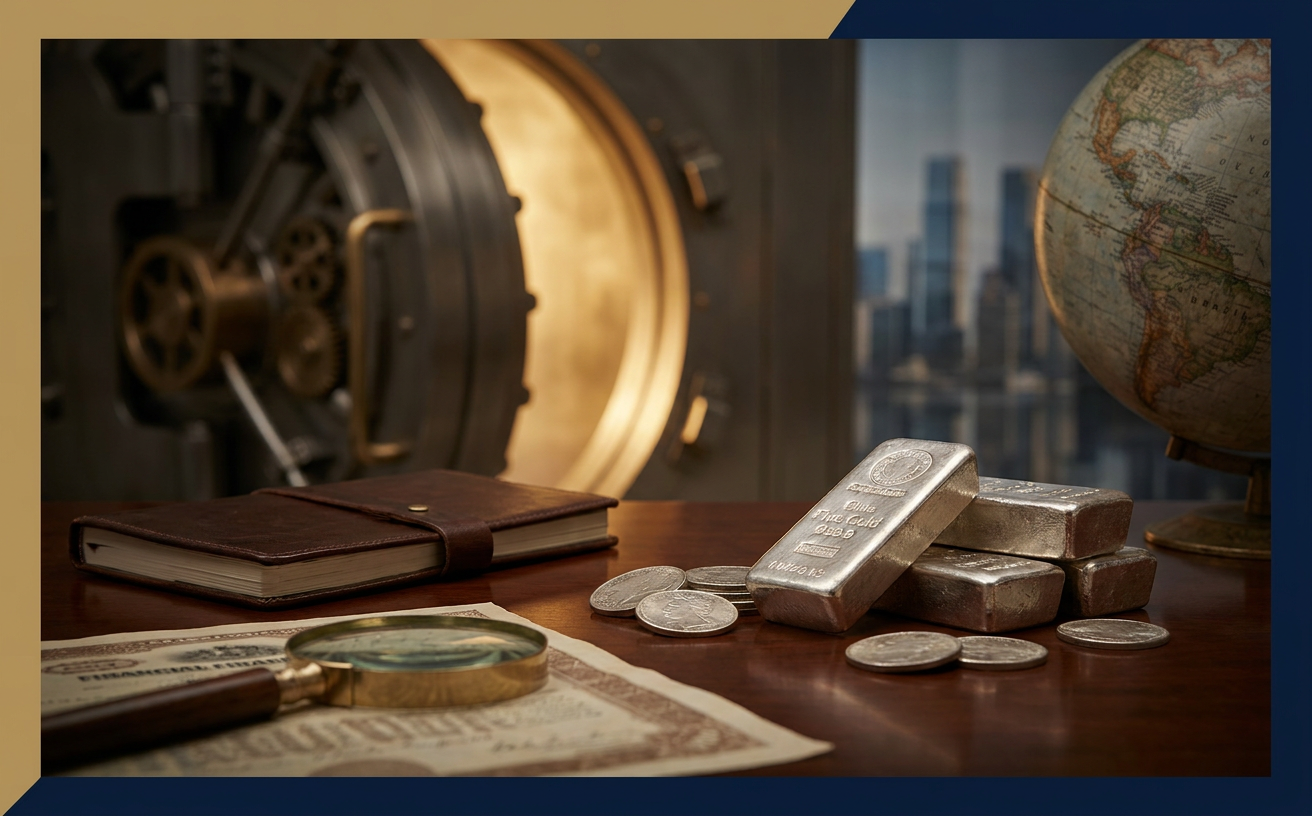
The Hunt Brothers and the 1980 Silver Squeeze: Lessons From a Market Cornering

Key Takeaways
- 1Market cornering attempts carry severe risks, often leading to significant losses for participants.
- 2Excessive leverage in commodity markets can amplify both gains and losses, posing substantial systemic risk.
- 3Regulators and exchanges possess mechanisms to intervene and prevent market manipulation, protecting overall market integrity.
- 4While speculative events can cause short-term volatility, long-term precious metal investing should be based on fundamental value and diversification.
- 5For serious investors, a diversified portfolio and adherence to sound investment principles remain paramount to navigating market complexities.
Introduction: A Historic Attempt to Corner the Silver Market
In the annals of financial history, few events capture the imagination and offer as many cautionary lessons as the Hunt Brothers’ attempt to corner the silver market in 1980. This audacious endeavor, driven by a belief in silver's intrinsic value and a desire for substantial profit, ultimately led to what became known as “Silver Thursday” and a dramatic intervention by regulators. For serious investors, understanding this event provides critical insights into market dynamics, the risks of concentrated positions, and the resilience of financial systems.
The Genesis of an Obsession: Why Silver?
Nelson Bunker Hunt and William Herbert Hunt, sons of Texas oil magnate H.L. Hunt, began accumulating silver in the early 1970s. Their motivations were multifaceted. They held a strong anti-fiat currency stance, viewing precious metals, particularly silver, as a true store of value in an inflationary economic climate. The geopolitical instability of the era, including the Soviet invasion of Afghanistan and ongoing Middle East tensions, further fueled their conviction that tangible assets would outperform paper currencies.
Initial acquisitions were significant but manageable. However, as the decade progressed, their strategy evolved into an aggressive accumulation, not just of physical silver but also silver futures contracts. Their holdings eventually grew to an estimated one-third of the world’s privately held silver supply.
The Mechanics of the Squeeze: Futures, Leverage, and Supply
The Hunt Brothers' strategy was predicated on the finite supply of silver and the amplifying power of the futures market. By accumulating vast quantities of both physical silver and long positions in silver futures contracts, they aimed to create an artificial scarcity. As the delivery dates for their futures contracts approached, they would demand physical delivery, further reducing the available supply on the open market.
Key Mechanics:
- Physical Accumulation: Buying millions of ounces of physical silver, storing it in vaults.
- Futures Contracts: Taking massive long positions in silver futures, betting on price increases.
- Leverage: Utilizing margin to control far greater amounts of silver than their immediate capital would allow. This amplified both potential gains and losses.
- Market Perception: The sheer scale of their purchases created a powerful psychological effect, drawing in other speculators and accelerating the price rise.
From early 1979 to January 1980, the price of silver skyrocketed from approximately $6 per ounce to a historic peak of over $49 per ounce. This meteoric rise generated immense paper wealth for the Hunts and their associates, but it also created unprecedented stress within the commodity markets.
The Breaking Point: Margin Calls and Regulatory Intervention
As silver prices climbed, so too did the margin requirements for the futures contracts. Exchanges, concerned about market stability and the potential for a catastrophic default, began to implement rule changes. The COMEX (Commodity Exchange Inc.), a major futures exchange, enacted
Found this article helpful?
Take Our 1-Minute Gold IRA Match Quiz
Get a personalized recommendation based on your goals and investment style.
Frequently Asked Questions
Explore Related Topics
For investors who don't have time to chase headlines.
Subscribe to The Precious Metals Report
Everything That Matters. Nothing That Doesn't.
No hype. No noise.
Just industry news — distilled into a short, scannable email.
✔ Price moves ✔ Market drivers ✔ Actionable insights
Editorial Team
Our editorial team covers investing for Precious Metals Report, focused on clear, unbiased reporting and investor education.
Read more from this author