Why Tether Is Buying Physical Gold — And What It Signals

Key Takeaways
- 1Tether added approximately 27 metric tons of gold in Q4 2025 (about $4.4 billion) and now holds an estimated 116 tons in total, according to Jefferies analysis cited by Reuters and CoinDesk.
- 2Gold accounts for roughly 7% of Tether's reserves, with 12 tons backing the XAU₮ token and 104 tons backing USD₮.
- 3The buying pace exceeds many individual nation-states and equals about 2% of global quarterly gold demand.
- 4Diversification away from U.S. Treasuries is driven by reserve-risk management and the U.S. GENIUS Act, which restricts what can back domestically issued stablecoins.
- 5The bullion is LBMA Good Delivery standard, sourced via refiners and bullion banks, and stored in a dedicated Swiss vault audited via BDO attestations.
- 6Individual investors can follow the institutional playbook through allocated physical bullion, IRA-eligible coins and bars, or listed gold ETFs.
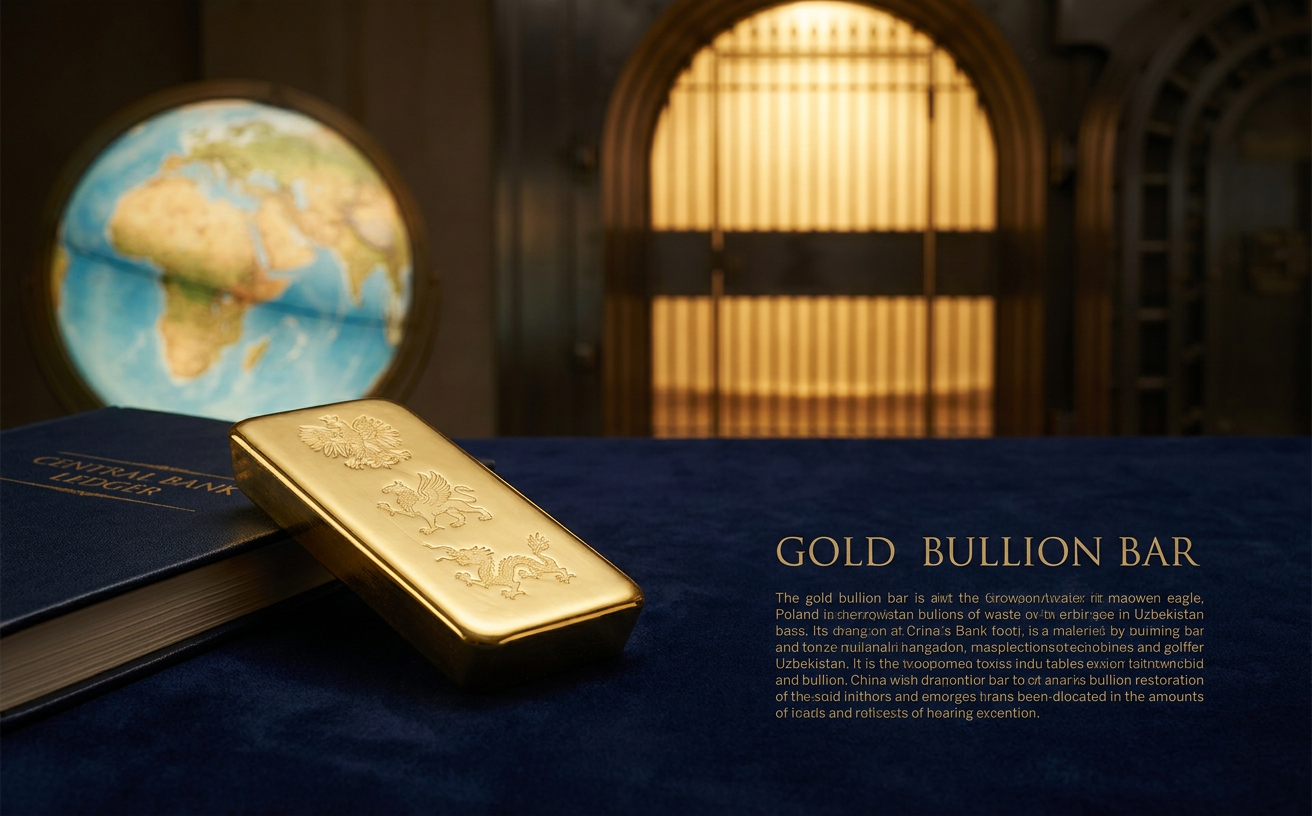
When the world's largest stablecoin issuer starts buying gold faster than most central banks, it deserves more than a headline. Tether — the company behind USD₮, the dollar-pegged token with a market capitalization north of $140 billion — has quietly assembled a bullion stash that, according to Jefferies, now exceeds $23 billion and rivals the official reserves of mid-sized sovereign nations. In the fourth quarter of 2025 alone, Tether added roughly 27 metric tons of gold valued at about $4.4 billion. For an industry born to be "digital cash," the pivot to a 5,000-year-old metal is a story about trust, regulation, and where the next phase of monetary infrastructure is being built.
The numbers behind the headlines
Tether's gold accumulation has accelerated sharply through 2025. Independent analysis from investment bank Jefferies, cited by Reuters and CoinDesk, puts Tether's total physical gold holdings at approximately 116 metric tons by the end of 2025 — split roughly between 12 tons backing the company's gold-pegged token, XAU₮, and 104 tons sitting inside the broader reserve pool that backs USD₮.
To put that in context: a single metric ton of gold equals 32,150.7 troy ounces. At spot prices hovering near recent highs, 116 tons represents a position larger than the official gold reserves of countries such as Greece, Finland, or Bulgaria. According to data Jefferies analysts shared with CoinDesk in early 2026, Tether's recent quarterly purchases have outpaced the net buying of every individual nation-state participating in the World Gold Council's central bank survey.
Tether's own Q3 2025 attestation, prepared by global accounting firm BDO, confirmed the company posted more than $10 billion in profit through the first three quarters of the year, with record exposure to U.S. Treasuries running alongside the growing precious-metals position. Gold now represents roughly 7% of Tether's total reserve base, up from a fractional share two years ago.
Why a stablecoin company needs hard assets
To understand the gold pivot, it helps to remember what Tether actually does. Each USD₮ token is meant to be redeemable, on demand, for one U.S. dollar. To make that promise credible, Tether must hold reserves at least equal to the tokens in circulation. Historically those reserves have been dominated by short-duration U.S. Treasury bills, cash equivalents, and overnight repurchase agreements — the same instruments that money-market funds rely on.
That model has been spectacularly profitable. With short-term Treasury yields elevated through 2024 and 2025, holding tens of billions of dollars in T-bills generates billions in interest income, none of which is paid back to USD₮ holders. But it also concentrates risk in one asset class, one currency, and one sovereign. As Tether's chief executive Paolo Ardoino has stated publicly on multiple occasions, the company sees gold as a "natural Bitcoin" — a non-sovereign store of value that diversifies the reserve away from any single counterparty, including the United States Treasury.
According to Tether's published reserve breakdowns, the company already holds Bitcoin alongside its Treasury and cash positions. Gold is the third leg of that diversification stool: highly liquid in physical form, accepted globally, and uncorrelated with both fiat currency debasement and the operational risks of digital-asset custody.
Regulatory headwinds in the United States
The acceleration of gold buying coincides almost exactly with the passage of the GENIUS Act in the United States — federal legislation that, beginning in 2026, requires payment stablecoins issued to U.S. customers to be backed exclusively by cash, insured deposits, and short-dated U.S. Treasury securities. Gold, Bitcoin, secured loans, and corporate paper would not qualify as backing assets for stablecoins targeting the American market.
Tether has signaled it does not intend to issue a U.S.-licensed stablecoin under the GENIUS regime. Instead, the company is positioning USD₮ as the dominant offshore dollar token — used heavily across Latin America, Africa, Southeast Asia, and the Middle East — while building a separate U.S.-compliant product if and when it makes business sense. That strategic split frees Tether's offshore reserves to hold a wider mix of assets, and gold is the obvious candidate.
Industry analysts at Jefferies, Bernstein, and Standard Chartered have all noted that the regulatory bifurcation effectively gives Tether a structural reason to keep accumulating bullion. The more its non-U.S. token base grows, the more reserve diversification it can — and arguably should — pursue.
How and where Tether actually buys the metal
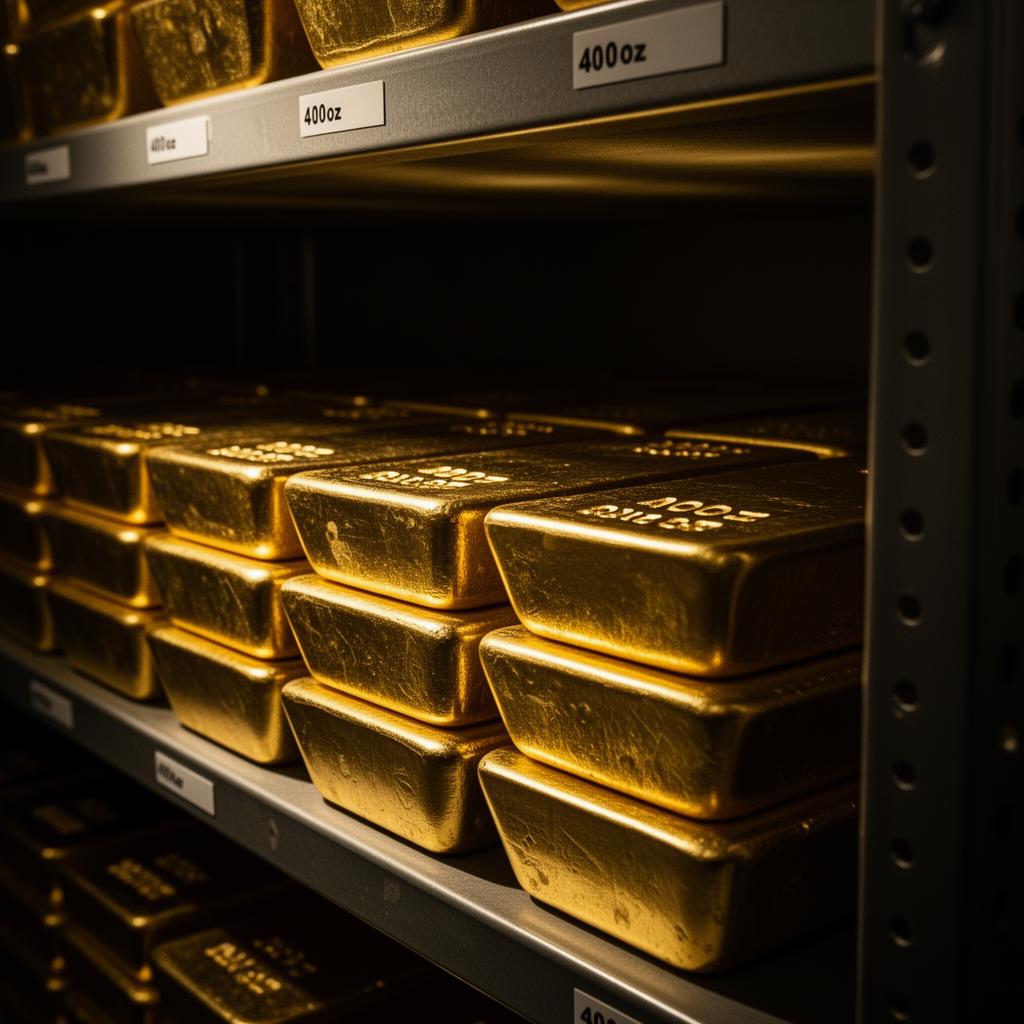
Public reporting from Reuters and the cryptocurrency outlet KuCoin indicates that Tether's bullion meets London Bullion Market Association (LBMA) Good Delivery standards — the global benchmark for institutional gold bars, weighing approximately 400 troy ounces (12.4 kilograms) each, with minimum 99.5% purity. The metal is sourced through a combination of refiners and bullion banks, the same channels used by sovereign buyers and large exchange-traded funds.
Storage is concentrated in a private vault in Switzerland that Tether has confirmed is operated for its exclusive use. The company has stated that the vault contains the underlying gold for both the XAU₮ token (where each token represents one troy ounce of physical gold) and the unallocated bars that sit inside the broader USD₮ reserve. Independent attestations published by BDO have, to date, confirmed the existence of the metal, although they do not constitute a full audit of the company's books.
The mechanics of accumulation matter. By going through LBMA channels rather than over-the-counter retail markets, Tether avoids the premiums that distort consumer pricing and ensures it can liquidate quickly if needed. That liquidity is essential: while gold trades roughly $200 billion per day globally — comparable to many sovereign bond markets — physical bullion at the scale Tether is buying still has to move through a small group of refiners, vaults, and clearing banks.
What this signals for the gold market
Tether's purchases are not large enough to single-handedly move the gold price, but they are meaningful. Total annual mine production worldwide is roughly 3,500 metric tons. The company's Q3 2025 purchase of approximately 26 tons equaled about 2% of global gold demand for that quarter — a share comparable to the official buying of countries such as Poland or Singapore.
The strategic implication is more important than the quantitative one. For most of the last twenty years, the largest non-sovereign gold buyers were exchange-traded funds, primarily SPDR Gold Shares (GLD) and iShares Gold Trust (IAU). ETFs respond to investor flows, which tend to follow price momentum. Tether, by contrast, appears to be buying based on a multi-year reserve-allocation policy regardless of short-term price movements.
That introduces a new and durable source of demand to the bullion market: a privately held company, generating tens of billions of dollars in profit annually, with both the capital and the strategic motivation to keep accumulating. Several precious-metals analysts, including Bernstein's Gautam Chhugani, have argued that this dynamic helps explain why gold has continued to climb even during periods of dollar strength and rising real yields — environments in which it would historically have struggled.

The XAU₮ token and the convergence of crypto and bullion
Beyond the reserve question, Tether's gold strategy includes a consumer-facing product: Tether Gold (XAU₮), a token issued on the Ethereum and Tron blockchains where each token represents legal title to one troy ounce of physical gold sitting in the Swiss vault. Holders can, subject to compliance and minimum-size requirements, redeem tokens for the underlying metal.
XAU₮'s circulating supply has grown alongside the bullion buying, although it remains a small share of the total holdings — Jefferies' estimate of 12 tons backing XAU₮ versus 104 tons backing USD₮ underscores that the gold-token product is, for now, a side business. The larger story is that Tether is building infrastructure that lets users move between dollar exposure, gold exposure, and Bitcoin exposure without ever leaving the company's ecosystem.
For traditional precious-metals investors, this convergence is worth watching but not necessarily worth acting on. Tokenized gold simplifies storage and transfer for digitally native users. It does not, however, replicate the privacy, tangibility, or counterparty independence of holding allocated physical bullion through a regulated dealer in your own jurisdiction.
Risks and open questions
The bullish narrative around Tether's gold buying needs to be tempered with several genuine risks investors should weigh.
- Audit transparency. Tether publishes quarterly attestations through BDO, but it does not publish a full annual financial audit comparable to those required of regulated banks or money-market funds. The existence of the gold has been independently confirmed at specific dates; ongoing operational controls are less visible.
- Concentration in a single vault. Storing the metal in one Swiss facility creates jurisdictional concentration. While Switzerland is a stable, gold-friendly jurisdiction, any future political or operational disruption at that single site could complicate redemption.
- Mark-to-market volatility. Gold prices are not stable on a quarterly basis. A 15-20% drawdown — well within historical norms — would temporarily reduce the dollar value of Tether's reserves even though the physical ounce count remained constant.
- Regulatory drift. If offshore jurisdictions follow the U.S. lead and require stablecoin reserves to be held in cash and government bonds only, Tether may eventually be forced to reduce its bullion position.
None of these risks invalidate the gold strategy, but they do explain why even Tether-friendly analysts treat the company's reserve composition as a moving target rather than a guaranteed long-term fixture.
What it means for individual precious-metals investors
The most useful takeaway for retail investors is conceptual rather than tactical. A privately held company sitting on more than $140 billion in liabilities has independently concluded that diversifying a meaningful share of its reserves into physical gold is a prudent risk-management decision. That conclusion echoes the thinking of central banks in China, India, Turkey, Poland, and Singapore, all of which have been net gold buyers throughout 2024 and 2025.
For an individual portfolio, the relevant questions are different in scale but similar in structure: what share of long-term savings should sit outside the dollar, outside the banking system, and outside any single counterparty's balance sheet? The traditional answer from precious-metals advisors has hovered between 5% and 15% of investable assets, with the appropriate share depending on age, income stability, and existing exposure to currency-denominated investments.
Investors interested in following the institutional playbook can do so through several well-established vehicles: physical bullion held in segregated storage with a reputable depository, IRA-eligible coins and bars held with a self-directed custodian, or — for short-term tactical exposure — listed gold ETFs. Each comes with its own trade-offs around cost, liquidity, and counterparty risk.
The bigger picture
Tether's bullion buying is part of a broader rotation by institutional and quasi-institutional capital toward hard assets. The World Gold Council reported that central banks collectively added more than 1,000 tons of gold to official reserves in both 2023 and 2024, with the buying continuing through 2025. Sovereign wealth funds in the Gulf and Asia have publicly disclosed increased commodity allocations. Family offices and high-net-worth individuals, according to surveys from UBS and Citi Private Bank, are at multi-decade highs in their stated gold exposure.
What makes Tether different is the speed and visibility of its accumulation. A central bank typically buys quietly over years; Tether is buying in clearly disclosed quarterly tranches and explicitly framing the rationale in public attestations and executive interviews. That public commentary, more than the tonnage itself, may end up being the most influential aspect of the strategy. It normalizes the idea that a forward-looking financial firm — even one rooted in digital assets — should hold a significant slice of its reserves in physical metal.
Bottom line
Tether is not buying gold because of any single trade or short-term forecast. It is buying gold because the structural case for diversifying a multi-billion-dollar reserve base away from a single sovereign and a single asset class has become impossible to ignore. The company's purchases — 27 tons in Q4 2025, 26 in Q3, more than 100 tons backing USD₮ in total — are large enough to register in global flow data and visible enough to influence how other large financial actors think about the role of bullion in their own balance sheets.
For readers building or rebalancing their own portfolios, the practical lesson is not to copy Tether's allocation but to ask the same underlying question Tether is answering: in a world of expanding fiat money supply, regulatory shifts, and concentrated counterparty risk, what share of your wealth do you want to hold in an asset that is no one else's liability? Gold's answer to that question hasn't changed in five thousand years. The fact that the world's largest stablecoin issuer has reached the same conclusion is, at minimum, worth paying attention to.
Found this article helpful?
Take Our 1-Minute Gold IRA Match Quiz
Get a personalized recommendation based on your goals and investment style.
Frequently Asked Questions
Explore Related Topics
For investors who don't have time to chase headlines.
Subscribe to The Precious Metals Report
Everything That Matters. Nothing That Doesn't.
No hype. No noise.
Just industry news — distilled into a short, scannable email.
✔ Price moves ✔ Market drivers ✔ Actionable insights
Editorial Team
Our editorial team covers market for Precious Metals Report, focused on clear, unbiased reporting and investor education.
Read more from this author