Kevin Warsh as Fed Chair: What It Means for Markets
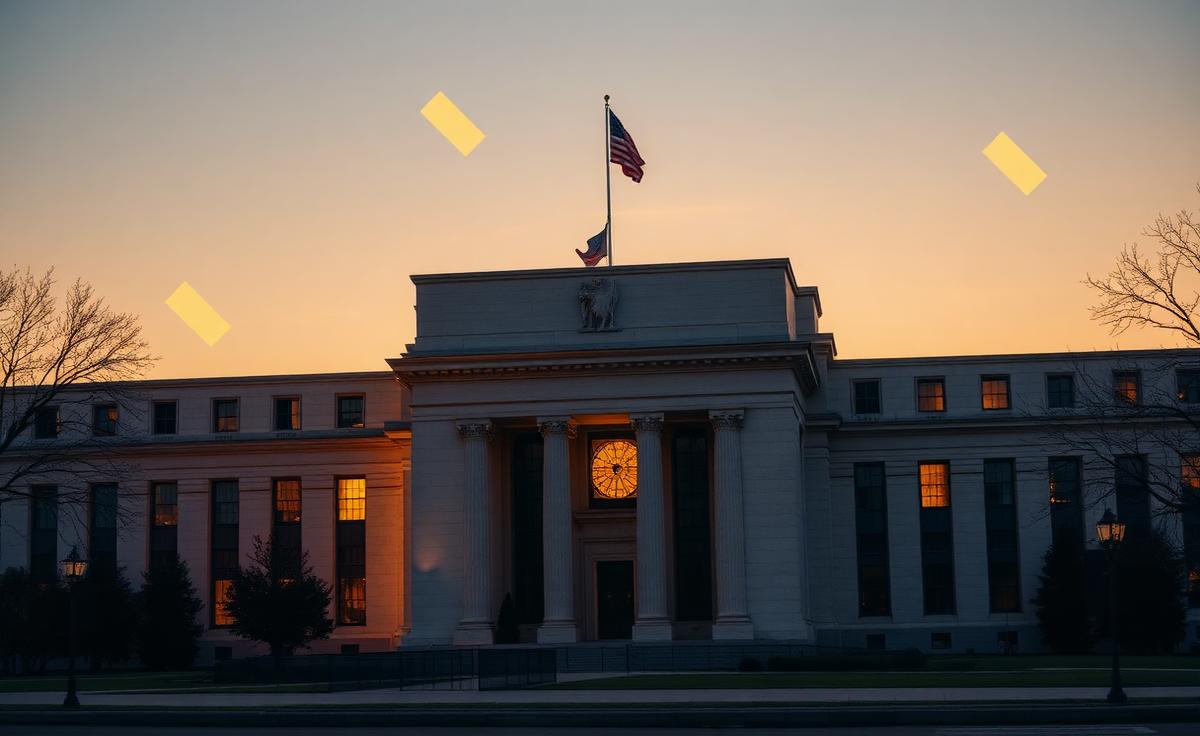
Kevin Warsh's nomination as the next Federal Reserve chair marks one of the most consequential appointments of the decade. A former Fed governor turned outspoken critic, Warsh promises "regime change" at the central bank — and markets are already trying to price what that means for rates, the dollar, and hard assets like gold.
Who is Kevin Warsh?
Kevin Warsh is no stranger to the Federal Reserve. He served as a Fed governor from 2006 to 2011, the youngest in the institution's history at the time of his appointment. He sat on the Federal Open Market Committee through the financial crisis, helped design emergency liquidity facilities, and resigned in 2011 in part over disagreements with then-chair Ben Bernanke about the costs of quantitative easing.
Since leaving the Fed, Warsh has been a fellow at the Hoover Institution at Stanford and a frequent commentator in the Wall Street Journal. He has consistently argued that the Fed's balance sheet has grown too large, that its forward guidance has become too rigid, and that the institution has drifted from its narrow monetary mandate into territory that belongs to elected officials.
President Trump nominated Warsh to succeed Jerome Powell in January 2026, and the White House formally sent his name to the Senate in early March. After the Department of Justice dropped its probe of Powell on April 24, 2026, prediction-market odds on Warsh's confirmation jumped from roughly 27% to 85% in a single session, according to GoldSilver.
"Regime change" at the central bank
In speeches and op-eds, Warsh has called for what he describes as a "regime change" at the Fed. He has not used the term loosely. The phrase covers four ideas that, taken together, would represent the most significant shift in U.S. monetary policy framework since the 2012 adoption of formal inflation targeting.
- A smaller balance sheet. Warsh has argued that the Fed's multi-trillion-dollar holdings of Treasuries and mortgage-backed securities distort markets, subsidize fiscal deficits, and blur the line between monetary and fiscal policy.
- Less forward guidance, more flexibility. He has been critical of the dot plot and of detailed guidance about future rate paths, arguing they lock policymakers into commitments that overtake incoming data.
- A narrower mandate in practice. Warsh has questioned the Fed's expansion into climate stress tests, financial-stability commentary, and broad social topics, urging a return to price stability and full employment as the operative focus.
- A lower neutral rate path — eventually. He has suggested that with a smaller balance sheet doing more of the work, the policy rate itself can be modestly lower without reigniting inflation. That nuance is critical and often missed.
Is Warsh a hawk or a dove?
The shorthand "inflation hawk" used by some headlines obscures more than it reveals. Warsh is a hawk on the institution — he wants a smaller, more disciplined Fed — but he is not a single-minded hawk on the policy rate. As Kitco summarized analyst reactions the day of the nomination, Warsh is "likely less loyal to Trump, but not more hawkish, and no worse for gold."
That distinction matters. A chair who shrinks the balance sheet but allows modest rate cuts could simultaneously tighten financial plumbing and ease the cost of credit. The mix is unusual, and markets are still figuring out how to price it.
The Fed independence question
The single most important variable in any Warsh-led Fed is independence. Warsh has been openly critical of Powell, but he has also drawn a clear line of his own. At his April 21, 2026 confirmation hearing, he told the Senate Banking Committee he would not be Trump's "sock puppet," a phrase that CNN noted was clearly designed to reassure markets.
For investors, the test is not what Warsh says before confirmation. It is whether the FOMC under his leadership cuts rates when politically convenient and holds them when politically inconvenient. Bond markets, currency markets, and the gold market will all be watching for the first dissent, the first surprise hold, the first refusal to deliver what the White House publicly asks for. That moment, whenever it comes, will define the credibility of his tenure.
What it could mean for interest rates
Most analysts who have parsed Warsh's writings expect a Warsh Fed to deliver a moderately lower terminal policy rate than a continuation of the Powell framework would have produced — perhaps 50 to 100 basis points lower over the medium term — paired with a meaningfully smaller balance sheet.
The logic: if quantitative tightening is doing more of the work of restraining demand, the funds rate does not have to do as much. That is a structurally different stance from the 2022–2024 cycle, where the Fed leaned almost entirely on the policy rate.
For mortgage rates, auto loans, and corporate borrowing, this could mean modest relief at the front end of the curve, paired with persistent pressure at the long end if the Fed is no longer reinvesting maturing Treasuries as aggressively. A steeper yield curve is the most consensus call on the Street as of mid-2026.
What it could mean for the dollar
The U.S. dollar is the variable most exposed to perceptions of Fed independence. After the nomination was announced in late January 2026, the dollar initially strengthened on relief that a credentialed, market-respected economist had been chosen rather than a pure political loyalist. Coverage at the time noted that gold, silver, and crypto all sold off from recent highs as the DXY firmed.
The longer-term picture is more complicated. If Warsh successfully shrinks the balance sheet and restores credibility, the dollar's reserve-currency premium is reinforced. If, instead, his Fed is perceived as bending to political pressure on rate cuts during the 2026–2028 cycle, the same dollar could face the kind of structural skepticism that has driven foreign central banks to add gold reserves at a record pace over the last three years.
What it could mean for gold
Gold's reaction to the Warsh era will be driven by three forces, only one of which is interest rates.
- Real yields. If Warsh cuts the policy rate while inflation remains sticky in the 2.5–3.0% range, real yields fall and gold benefits — the classic relationship.
- Dollar trajectory. A credible, independent Fed strengthens the dollar and is a near-term headwind for gold priced in USD. A politicized Fed weakens the dollar and is a long-term tailwind.
- Central bank demand. The single largest source of gold demand since 2022 has been foreign official-sector buying, much of it driven by concerns about U.S. monetary credibility and sanctions risk. A Warsh Fed perceived as restoring discipline could marginally slow that buying; a Warsh Fed perceived as a White House extension would likely accelerate it.
Our base case for 2026 remains a gold price grinding toward $5,250 per ounce, with silver tracking around $93.50, driven primarily by central bank demand and the structural deficit narrative — not by any single Fed personnel decision. Warsh's confirmation changes the path, not the destination.
What it could mean for equities
Equity markets have generally welcomed the Warsh nomination, with rate-sensitive sectors — regional banks, homebuilders, small caps — outperforming on any signal that the policy rate could move lower. The risk for equity bulls is that a smaller balance sheet removes a meaningful source of liquidity that has supported multiples since 2009. A Warsh Fed could deliver lower rates and tighter financial conditions at the same time, which is not the script that the post-2008 equity bull market has been written in.
Investors should expect more dispersion across sectors, more sensitivity to balance-sheet language at FOMC meetings, and less of the across-the-board "everything rallies on a dovish hint" reflex of the past 15 years.
The risks to this view
Three things could derail the Warsh framework before it is implemented.
- The Senate vote. Confirmation odds rose sharply after the DOJ dropped the Powell probe, but the math in a closely divided Senate is not automatic. Senator Tillis has already signaled opposition; a handful of additional defections could force a renegotiation.
- A near-term recession. If the U.S. economy slips into recession before Powell's term ends in May 2026, the political pressure on any incoming chair to deliver large, fast rate cuts could overwhelm the careful "regime change" framework Warsh has described.
- An external shock. A geopolitical or financial-stability event could force the Fed back into emergency liquidity mode, which would expand the balance sheet rather than shrink it. Warsh's framework would then be paused before it begins.
The bottom line
Kevin Warsh as Fed chair is not a simple "hawk" or "dove" story, and treating his nomination as a single-direction trade is a mistake. The more useful framing is that he represents an attempt to reset the rules of the game: a smaller, narrower, more rules-based Federal Reserve that uses the balance sheet less and the policy rate more flexibly than the post-2008 institution did.
For investors in precious metals, the implication is straightforward. Gold and silver remain a hedge against the failure mode of this experiment — a Fed that loses independence, a dollar that loses credibility, or an inflation regime that proves stickier than the new framework expects. None of those scenarios are base cases. All of them are more plausible in a transition year than in a steady-state one.
The next twelve months will tell us which version of Warsh actually shows up at the Marriner S. Eccles Building. Until then, the right posture is the one that has worked for long-term metals investors through every Fed chair since the gold standard ended: own a meaningful core position, ignore the headlines about any single meeting, and let the institutional drift do the work.
Found this article helpful?
Take Our 1-Minute Gold IRA Match Quiz
Get a personalized recommendation based on your goals and investment style.
Explore Related Topics
For investors who don't have time to chase headlines.
Subscribe to The Precious Metals Report
Everything That Matters. Nothing That Doesn't.
No hype. No noise.
Just industry news — distilled into a short, scannable email.
✔ Price moves ✔ Market drivers ✔ Actionable insights
Editorial Team
Our editorial team covers market for Precious Metals Report, focused on clear, unbiased reporting and investor education.
Read more from this author