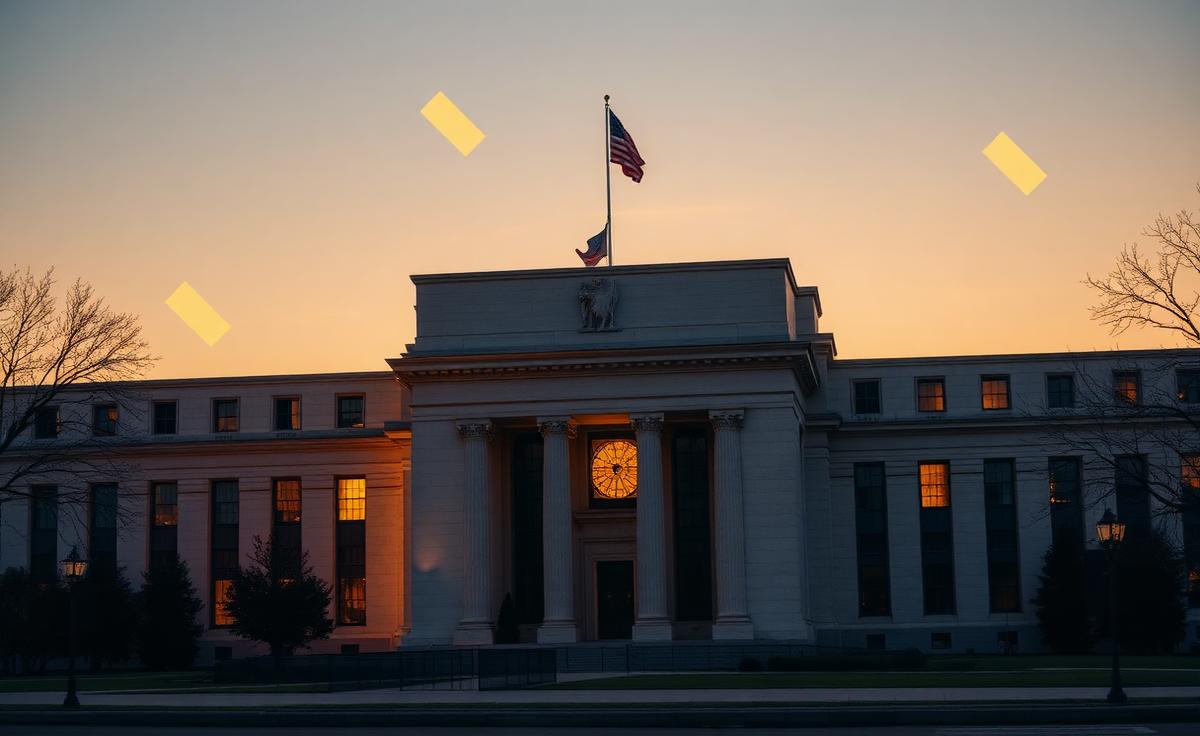
The Trump-Powell Feud Explained: A Standoff Over the Fed and the Future of Money
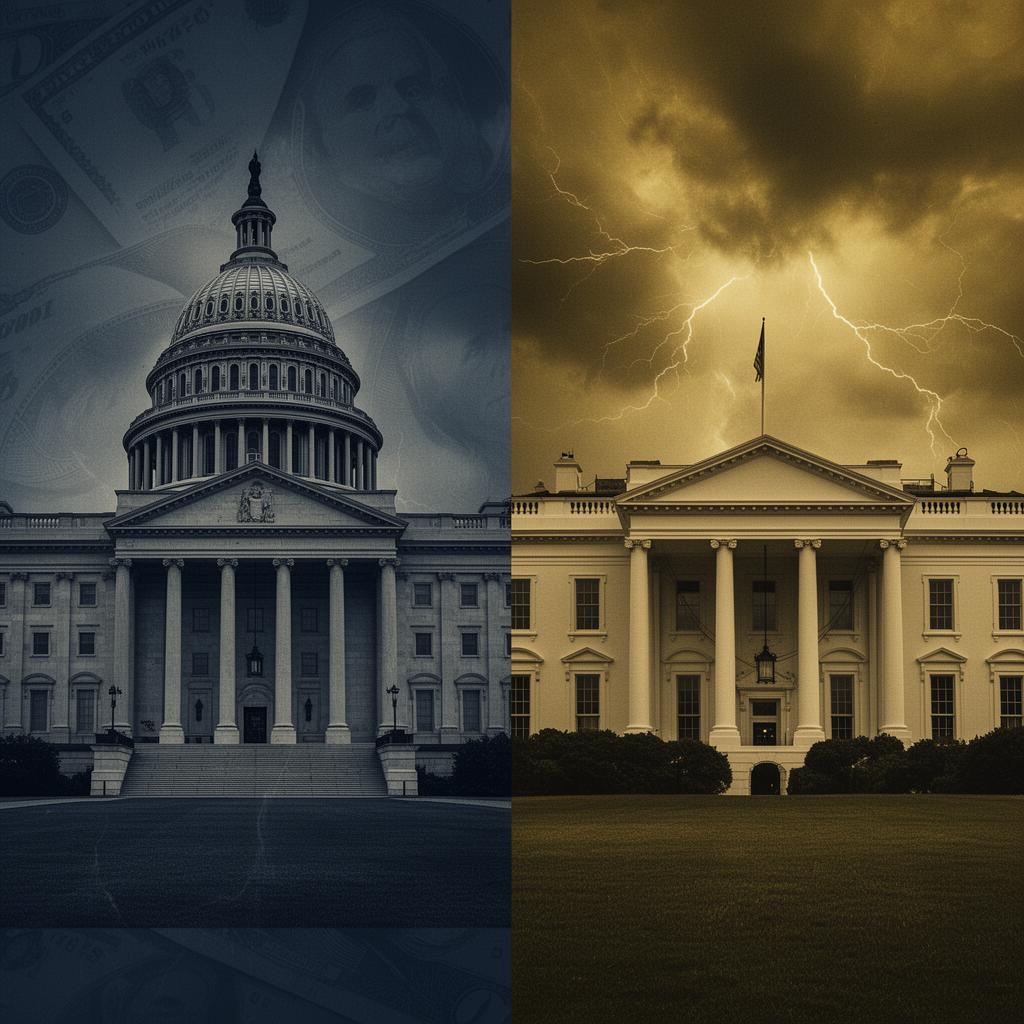
Key Takeaways
- Trump nominated Powell in 2017 but began publicly attacking him by 2018 after the Fed raised rates.
- In Trump’s second term, the conflict escalated from rhetoric to investigations and explicit firing threats.
- The $2.5B Fed headquarters renovation became the administration’s primary legal angle for potential removal.
- Powell has signaled he intends to remain on the Board of Governors after his chair term ends May 15, 2026.
- Markets have responded to each escalation with weaker dollar, stronger gold, and steeper yield curves.
- Central bank independence is empirically tied to lower, more stable inflation — erosion typically benefits hard assets.
For nearly a decade, the relationship between President Donald Trump and Federal Reserve Chair Jerome Powell has swung between uneasy partnership and open warfare. What began as a Trump appointment in 2017 has become one of the most consequential standoffs in modern U.S. economic policy — a fight over interest rates, central bank independence, and ultimately, who controls the price of money in America.
For investors in stocks, bonds, and especially precious metals, this is not political theater. The outcome shapes the dollar's purchasing power, the trajectory of inflation, and the long-run case for owning gold and silver as hedges against policy risk.
How a Trump Appointee Became Trump's Top Antagonist
Donald Trump nominated Jerome Powell to chair the Federal Reserve in November 2017, choosing him over the incumbent Janet Yellen. At the time, Powell — a Republican, a lawyer, and a former private-equity executive — was viewed as a safe, market-friendly pick who would continue a low-rate, growth-oriented policy.
The honeymoon ended almost immediately. By 2018, the Fed had begun raising interest rates to normalize monetary policy after years of near-zero rates following the 2008 financial crisis. Trump, who had built much of his economic messaging around stock market gains and cheap credit, publicly broke from tradition and began attacking the Fed chair he had personally selected.
Presidents historically avoid commenting on Fed policy, an unwritten rule designed to preserve the central bank's independence from short-term political pressure. Trump shattered that norm, calling Powell "loco," "an enemy," and famously asking on social media whether Powell was a bigger threat to America than China's leader. The pattern was set: when rates went up — or even stayed flat — Powell was the villain.
The Second Term: From Criticism to Constitutional Crisis
When Trump returned to the White House in January 2025, the dynamic shifted from rhetorical sparring to something closer to a constitutional standoff. Throughout 2025 and into 2026, Trump repeatedly demanded immediate, aggressive interest rate cuts, arguing that the U.S. economy was being held back by an overly cautious Fed.
Powell, whose four-year term as chair was set to expire in May 2026, held the line. The Federal Open Market Committee (FOMC) cut rates only modestly through 2025, citing sticky services inflation, tariff-driven price pressures, and a labor market that — while cooling — remained tighter than the Fed's models suggested was consistent with 2% inflation.
The president's response escalated in three distinct phases:
- Phase one — public pressure (early 2025): Trump used press conferences and social media to demand cuts of 100 basis points or more, arguing every meeting that the Fed was "too late" and "killing" the economy.
- Phase two — institutional pressure (mid-2025): The administration announced an inquiry into the Fed's $2.5 billion headquarters renovation in Washington, D.C., framing it as a question of fiscal stewardship. Critics described the probe as a pretext to manufacture cause for removal.
- Phase three — direct threats (late 2025 into 2026): Trump openly stated, including in an April 2026 interview with Fox Business, that he would fire Powell if Powell tried to remain on the Federal Reserve Board after his chairmanship ended.
The $2.5 Billion Renovation Probe
The Fed's headquarters renovation — a multi-year overhaul of two historic buildings — became the administration's primary legal angle. By mid-2025, what was once a niche budget story had been elevated into the central artifact of the feud, with the Department of Justice and congressional allies pursuing parallel investigations.
Powell defended the project's costs in detail, citing security upgrades, asbestos remediation, and structural work on buildings dating to the 1930s. He pushed back at a July 2025 site visit where Trump appeared in person to inspect the construction, an extraordinary moment captured on camera and widely covered by Bloomberg, Reuters, and the BBC.
By early 2026, Foreign Policy, the BBC, and others were openly describing the standoff as a war over Fed independence. PolitiFact published a detailed timeline of Trump's statements about Powell since April 2025, documenting an unprecedented volume of public criticism of a sitting Fed chair.
What the Fight Is Really About: The Cost of Money
Strip away the personalities and the renovation drama, and the Trump–Powell feud reduces to a single disagreement: how cheap should credit be?
The president's view, expressed consistently since 2018, is that lower rates would boost growth, lift equities, ease the federal government's interest costs on a $36+ trillion debt load, and weaken the dollar enough to help U.S. exporters. By his framing, inflation is largely solved and the Fed is needlessly restrictive.
Powell's view, anchored in the Fed's dual mandate of price stability and maximum employment, has been more cautious. The committee has worried about second-round inflation effects from tariffs, the persistence of services inflation, and the credibility cost of cutting too soon and having to reverse course. Powell has repeatedly emphasized that the Fed makes decisions based on data, not political pressure — and that "the things that have happened really in the last three months have been unprecedented," as he said in April 2026.
For investors, the technical fight masks a more important question: can the Federal Reserve still make unpopular decisions when politicians don't want to hear them? That question goes to the heart of why central bank independence exists in the first place.
Why Fed Independence Matters for Markets
Modern central banking rests on a fragile institutional bargain. Politicians control fiscal policy — taxing and spending — but delegate monetary policy to technocrats insulated from the election cycle. The reason is straightforward: elected officials almost always prefer lower rates in the short term, even when long-term inflation requires the opposite.
Decades of cross-country research, summarized by economists at the Brookings Institution and the IMF, show that countries with more independent central banks tend to have lower and more stable inflation. When that independence erodes — Argentina and Turkey are recent examples — currency depreciation, capital flight, and double-digit inflation often follow.
The U.S. dollar's status as the global reserve currency depends in large part on the credibility of the Federal Reserve. If markets begin to suspect that the Fed will be forced to cut rates for political reasons, the consequences are predictable:
- Long-term Treasury yields rise as bond investors demand higher inflation premiums.
- The dollar weakens against other major currencies and against hard assets.
- Inflation expectations drift higher, making future inflation more difficult to control.
- Gold, silver, and other tangible stores of value typically appreciate as policy hedges.
Can a President Actually Fire the Fed Chair?
The legal question is unsettled but not blank. Under the Federal Reserve Act of 1913, governors of the Federal Reserve Board, including the chair, can be removed only "for cause" — historically interpreted as misconduct or neglect of duty, not policy disagreement. The Supreme Court's 1935 Humphrey's Executor decision provides the constitutional backdrop, protecting independent agency officials from at-will removal.
In May 2025, the Supreme Court signaled in a separate case that Federal Reserve officials may enjoy unique constitutional protections distinct from other independent agencies, citing the Fed's "quasi-private" structure. Legal scholars at CBS News and other outlets have noted that this language likely makes a direct firing of Powell legally precarious — but not impossible to attempt.
Powell, for his part, has indicated he intends to serve out his term as a governor (which extends to January 2028) even after his chairmanship ends in May 2026. Trump has said publicly he would fire Powell if he tries to do so. Whether such a firing would survive legal challenge — and how markets would react during the months of litigation — is one of the most consequential open questions in U.S. financial policy.
How Markets Have Responded
Each escalation in the feud has produced a recognizable market signature: weaker dollar, stronger gold, steeper yield curve. The pattern is consistent enough that several major banks have begun publishing "Fed independence" risk premium estimates as part of their macro research.
Gold, in particular, has been a primary beneficiary. The metal's appeal as a non-political store of value strengthens whenever central bank credibility is questioned. Through 2025 and into 2026, gold has moved sharply higher on each major Powell-related headline, reflecting institutional demand for assets that sit outside the dollar system.
Silver, platinum, and palladium have moved in sympathy, though with greater volatility. Mining equities have lagged at times — they carry operational and equity-market risk that pure bullion does not — but the underlying thesis is similar: when the institutions that govern fiat currency look unstable, hard assets get bid.
The Endgame and What Comes Next
Powell's term as chair ends on May 15, 2026. Three scenarios dominate market discussion:
- A negotiated handoff: Powell steps down as chair, leaves the board, and the administration nominates a successor more aligned with the president's preferred rate path. This is the path of least institutional damage but the largest immediate dovish shift in policy.
- Powell stays as governor: Powell exercises his legal right to remain on the Board of Governors through 2028, providing institutional continuity and a check on a more dovish chair. Trump has said he will attempt to fire him in this case, setting up litigation.
- Direct removal attempt: The administration moves to remove Powell before May 2026 using the renovation probe as cause. Markets would likely treat this as a sharp negative for the dollar and a sharp positive for gold and other hard assets, regardless of the legal outcome.
Whichever path unfolds, the next Fed chair will inherit an institution whose perceived independence has been challenged in ways no chair has had to navigate in modern history. Even a friendly succession does not erase that legacy — the precedent has been set, and future presidents will know what is possible.
Bottom Line for Investors
The Trump–Powell feud is, at its core, a stress test of one of the world's most important institutions. It is unlikely to be neatly resolved in May 2026; the legal, political, and market consequences will play out over years.
For long-term investors, the practical takeaways are straightforward. Diversification away from any single currency or policy regime matters more when central bank independence is contested. Precious metals — held in physical form or through reputable IRA structures — have historically performed well during periods of monetary policy uncertainty, and the current environment is, by almost any measure, the most uncertain in a generation.
Whether or not the feud ends with a firing, a resignation, or a quiet transition, the questions it has raised about the future of U.S. monetary policy will not go away. Investors who plan accordingly — by understanding the stakes and hedging where prudent — will be better positioned than those who treat each headline as noise.
Frequently Asked Questions
When does Jerome Powell’s term as Fed chair end?
Powell’s four-year term as chair of the Federal Reserve ends on May 15, 2026. His separate term as a member of the Board of Governors runs through January 2028, and he has stated he intends to serve out that role.
Can a president legally fire the Fed chair?
Under the Federal Reserve Act, governors can only be removed "for cause," historically interpreted as misconduct rather than policy disagreement. A 2025 Supreme Court signal suggested Fed officials may have unique constitutional protections, but the question has never been definitively tested.
Why does Fed independence matter for investors?
Independent central banks tend to deliver lower and more stable inflation. When independence is questioned, long-term yields typically rise, the dollar weakens, and hard assets like gold tend to appreciate as policy hedges.
How has gold reacted to the Trump-Powell feud?
Gold has moved sharply higher on each major escalation, reflecting institutional demand for non-political stores of value. Silver, platinum, and palladium have followed with greater volatility.
What is the Fed renovation controversy about?
The Fed’s headquarters underwent a $2.5 billion multi-year renovation. The Trump administration has used questions about cost overruns as the institutional basis for an inquiry that critics say is intended to manufacture cause for removing Powell.
What happens to interest rates if Powell leaves?
A successor more aligned with the administration would likely cut rates more aggressively in the short term. Long-term rates may move in the opposite direction as bond markets price in higher inflation expectations from a less independent Fed.
Found this article helpful?
Take Our 1-Minute Gold IRA Match Quiz
Get a personalized recommendation based on your goals and investment style.
Frequently Asked Questions
Explore Related Topics
For investors who don't have time to chase headlines.
Subscribe to The Precious Metals Report
Everything That Matters. Nothing That Doesn't.
No hype. No noise.
Just industry news — distilled into a short, scannable email.
✔ Price moves ✔ Market drivers ✔ Actionable insights
Editorial Team
Our editorial team covers market for Precious Metals Report, focused on clear, unbiased reporting and investor education.
Read more from this author