Top 10 Most Iconic Gold Coins Every Collector Should Know
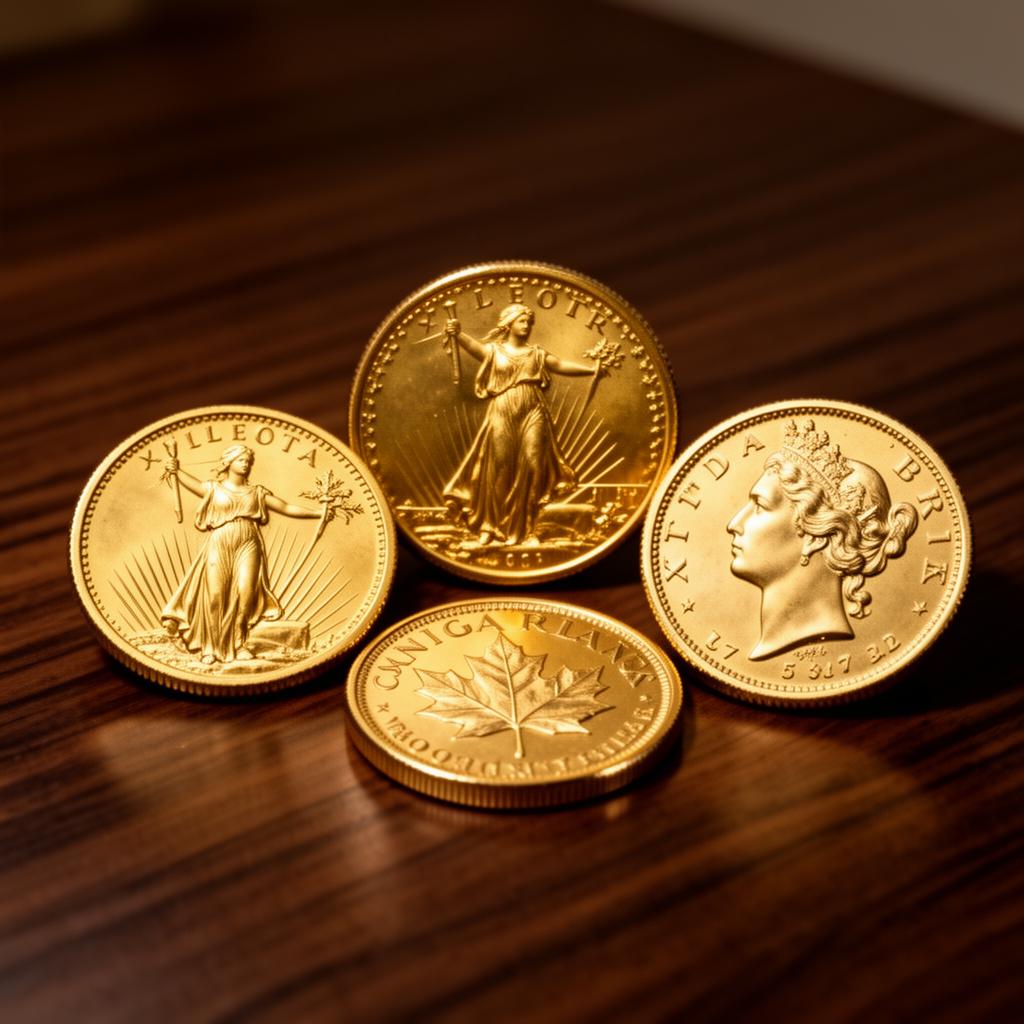
Gold coins are more than just circular pieces of precious metal; they are tangible assets that connect us to history, art, and global commerce. For the discerning collector and investor, certain gold coins stand out, possessing an iconic status that transcends their intrinsic melt value. This status is earned through a combination of beautiful and enduring design, significant historical context, and strong market liquidity. Owning these coins is to hold a piece of a nation's identity and a globally recognized store of wealth. This guide delves into the ten most iconic gold coins, exploring the unique stories and characteristics that make them essential for any serious collection, distinguishing between their bullion appeal and their numismatic, or collectible, premium.
Key Takeaways
- Iconic gold coins blend historical significance, artistic design, and investment-grade bullion value.
- Key coins like the American Gold Eagle and Canadian Gold Maple Leaf are mainstays of the modern bullion market, offering high purity and liquidity.
- Historic coins, such as the Saint-Gaudens Double Eagle and British Sovereign, carry significant numismatic premiums based on rarity and condition.
- Some coins, like the Chinese Panda and Australian Kangaroo, feature annually changing designs, appealing to both collectors and investors.
- Understanding the difference between bullion value (melt price) and numismatic value (collectible price) is crucial for making informed purchasing decisions.
- IRA eligibility is a key factor for investors, typically requiring coins of specific purity, like the .9999 fine American Buffalo or .9167 fine American Gold Eagle.
How We Chose These Coins
Selecting the "top 10" from a world of remarkable gold coinage requires a clear set of criteria. The coins on this list were chosen for their enduring impact on the precious metals market and the world of numismatics. Our evaluation focused on five key pillars: historical importance and the story behind the coin's creation; design legacy and artistic merit; mintage and global recognizability; market liquidity and its role as an investment vehicle; and its influence on subsequent coinage. Each coin represents a milestone in minting history, design, or bullion investment.
The 10 Most Iconic Gold Coins
1. Saint-Gaudens Double Eagle (USA, 1907–1933)
Often hailed as the most beautiful coin ever minted by the United States, the Saint-Gaudens Double Eagle is the result of a direct collaboration between President Theodore Roosevelt and renowned sculptor Augustus Saint-Gaudens. Roosevelt envisioned an American coinage that rivaled the artistry of ancient Greek and Roman coins. The resulting $20 gold piece, first struck in 1907, was a triumph. The obverse features a powerful depiction of Lady Liberty striding forward, torch in one hand and olive branch in the other, with the U.S. Capitol in the background. The reverse showcases a majestic eagle in flight against the rays of the sun.
The initial 1907 issues were struck in stunning high relief, a detail that proved impractical for mass production and was quickly modified to a lower relief for circulation. The coin is composed of 0.9675 troy ounces of gold in a 90% gold, 10% copper alloy. Its official production ceased in 1933 when President Franklin D. Roosevelt took the U.S. off the gold standard and outlawed private ownership of most gold. This led to the creation of the world's most valuable coin: the 1933 Double Eagle. Nearly all were melted down, but a handful escaped, with one specimen selling for a record $18.9 million in 2021. For collectors, owning any Saint-Gaudens is a pinnacle achievement, with even common-date circulated examples carrying a significant premium over their gold content.
2. American Gold Eagle (USA, 1986–present)
The American Gold Eagle is the cornerstone of modern gold bullion investment in the United States. First released in 1986, it was authorized by the Gold Bullion Coin Act of 1985, which allowed the U.S. Mint to produce gold coins for investors from U.S.-sourced gold. The coin’s design is a powerful tribute to American history. The obverse features a modified version of Augustus Saint-Gaudens' iconic Liberty from the 1907–1933 Double Eagle. The original reverse (Type 1, 1986-2021) by Miley Busiek depicted a male eagle carrying an olive branch to a nest with a female eagle and hatchlings, symbolizing family and national security.
In mid-2021, the U.S. Mint introduced a new reverse design (Type 2) by Jennie Norris, featuring a striking, detailed portrait of an eagle's head. The Gold Eagle is intentionally struck in a 22-karat (.9167 fine) alloy, with the remaining balance composed of silver and copper. This creates a more durable coin that resists scratching and handling marks better than 24-karat coins. Containing one full troy ounce of pure gold, the 1 oz coin has a face value of $50 but trades based on its gold content. Crucially, the American Gold Eagle is IRA-eligible, making it a favorite for retirement portfolios. Its ubiquity and instant recognizability ensure excellent liquidity worldwide.
3. Canadian Gold Maple Leaf (Canada, 1979–present)
When the Canadian Gold Maple Leaf was introduced in 1979, it revolutionized the bullion market. At the time, the South African Krugerrand was the only major gold bullion coin available, but its circulation was restricted in many countries due to apartheid-era sanctions. The Royal Canadian Mint seized this opportunity, creating a coin that would set a new standard for purity. The Maple Leaf was the first widely-available bullion coin to be struck from .999 fine (99.9%) gold. In 1982, the mint raised the bar even further to .9999 fine ("four nines") purity, a level that has since become the industry benchmark.
The coin's design is simple yet elegant. The obverse features a portrait of Queen Elizabeth II (updated several times over the years), while the reverse displays Canada's national symbol, the maple leaf, rendered in intricate detail. To combat counterfeiting, the Royal Canadian Mint has incorporated advanced security features since 2013, including radial lines and a micro-engraved maple leaf with the year of issue visible under magnification. With a face value of C$50 for the 1 oz coin, its value is tied to its gold content. As hypothetical gold prices reach $5,250 per ounce, a 1 oz Maple Leaf’s bullion value would directly reflect that, with only a small premium, making it one of the most efficient and trusted ways to own pure gold.
4. South African Krugerrand (South Africa, 1967–present)
The South African Krugerrand is the progenitor of the modern gold bullion coin. First minted in 1967, it was conceived as a way to market South Africa's vast gold reserves directly to individual investors. It was the first one-ounce gold coin designed to trade at a low premium above the spot price of gold. Its name is a portmanteau of Paul Kruger, the four-term president of the old South African Republic (featured on the obverse), and the "rand," South Africa's national currency. The reverse, designed by Coert Steynberg, depicts a pronking springbok, a national symbol of South Africa.
Like the American Gold Eagle, the Krugerrand is struck in a 22-karat (.9167 fine) gold-copper alloy. The copper gives the coin its distinctive orange-hued patina and makes it highly durable for handling and circulation. Each 1 oz coin contains exactly one troy ounce of pure gold. Despite having no official face value, it is considered legal tender in South Africa. For over a decade, the Krugerrand dominated the global market, accounting for 90% of gold coin sales by 1980. Though international sanctions against apartheid hampered its distribution in the 1980s and '90s, it remains one of the most widely held and recognized gold coins in the world, with more Krugerrands in circulation than all other gold bullion coins combined.
5. British Gold Sovereign (UK, 1817–present, modern era)
With a history dating back over 500 years and its modern form minted continuously since 1817, the British Gold Sovereign is an icon of global finance and empire. Following the Great Recoinage of 1816, the modern Sovereign was introduced with a face value of one pound sterling. Its design has become legendary: the obverse features the reigning monarch, while the reverse bears Benedetto Pistrucci’s neoclassical masterpiece of St. George slaying the dragon. This dynamic design has remained a near-constant feature for over two centuries, lending the coin unparalleled recognition.
The Sovereign is smaller than the typical one-ounce bullion coin, specified at a weight of 7.98 grams and struck in 22-karat gold. This gives it an actual gold weight of 0.2354 troy ounces. This smaller size makes it highly accessible for investors with smaller budgets and allows for greater divisibility in a portfolio. During the 19th and early 20th centuries, the Sovereign was a workhorse of international trade, minted not only in London but also at branch mints in Australia, Canada, India, and South Africa. Today, it is prized by both collectors, who seek out rare dates and mint marks, and investors, who appreciate its historical heft, liquidity, and status as Capital Gains Tax (CGT) exempt for UK residents.
6. Austrian Gold Philharmonic (Austria, 1989–present)
Celebrating the cultural heritage of Austria, the Gold Philharmonic is one of the world's best-selling bullion coins and a dominant force in the European market. First issued in 1989, it pays homage to the world-renowned Vienna Philharmonic Orchestra. The coin's unique theme sets it apart from the political and animal motifs common on other bullion coins. The intricate design is the work of Thomas Pesendorfer, the chief engraver of the Austrian Mint. The obverse features the Great Organ of the Golden Hall in Vienna's Musikverein. The reverse showcases an artful arrangement of orchestral instruments: a cello, four violins, a Vienna horn, a bassoon, and a harp.
Struck in .9999 fine (24-karat) gold, the Philharmonic offers maximum purity. It was originally denominated in Austrian Schillings, but after Austria adopted the new currency, it became the first bullion coin to be issued with a face value in Euros in 2002 (the 1 oz coin has a face value of €100). The coin's combination of high purity, beautiful and unique design, and the backing of the historic Austrian Mint has made it immensely popular worldwide. Its consistent, low premium over the spot price of gold makes it a favorite among investors seeking to add pure, liquid gold to their holdings.
7. Chinese Gold Panda (China, 1982–present)
The Chinese Gold Panda occupies a unique niche in the market, successfully bridging the gap between a bullion coin and a semi-numismatic collectible. First introduced in 1982, its key feature is the annually changing design on its reverse, which always features the Giant Panda, an adored national symbol of China. This yearly change (with the exception of 2001/2002) creates inherent collectibility, as each year's coin becomes a limited-edition release. The obverse design is constant, featuring a depiction of the Hall of Prayer for Good Harvests within the Temple of Heaven in Beijing, a UNESCO World Heritage site.
Initially struck in .999 fine gold, the Panda has gone through several specification changes. A significant shift occurred in 2016 when the China Gold Coin Corporation moved from imperial troy ounces to metric weights. The standard 1 oz coin was replaced by a 30-gram coin (approximately 0.9645 troy ounces). Due to their collectible nature, Gold Pandas typically command a higher premium over the spot gold price compared to other bullion coins. Back-dated Pandas, especially from the early years or in top-graded condition, can trade for significantly more than their melt value. This makes the Panda a compelling choice for those who want their gold investment to have the potential for numismatic appreciation.
8. Mexican Centenario / 50 Pesos (Mexico, 1921–present)
The Mexican 50 Pesos, widely known as the Centenario, is a heavyweight among classic gold coins. It was first minted in 1921 by the Banco de México to commemorate the 100th anniversary of Mexico's independence from Spain. With its substantial size and beautiful design, it quickly became a favorite for investors and collectors. The coin contains 37.5 grams (1.2057 troy ounces) of pure gold, making it about 20% larger than the standard one-ounce coin. It is struck in a 90% gold, 10% copper alloy, giving it excellent durability.
The obverse features the Mexican coat of arms, an eagle perched on a cactus devouring a serpent. The reverse is celebrated for its stunning depiction of the Angel of Independence, with the famed Mexican volcanoes Popocatépetl and Iztaccíhuatl in the background. The date "1821" on the lower left honors the year of independence, while the date on the right indicates the year of mintage. Many restrikes minted after 1947 carry the "1947" date. These restrikes are widely available and trade at a price close to their bullion value, making them an excellent way to acquire a large, historic, and beautiful gold coin. Given its 1.2057 oz gold content, a Centenario would have a bullion value over $6,300 in a hypothetical $5,250/oz gold market, making it a significant single-coin holding.
9. American Buffalo (USA, 2006–present)
The American Buffalo was a direct response by the U.S. Mint to the growing global demand for 24-karat gold coins, pioneered by the Canadian Maple Leaf. First struck in 2006, the Buffalo became the United States' first-ever .9999 fine (24-karat) gold coin available to the public. Congress mandated that the coin reproduce one of America's most cherished classic coin designs: James Earle Fraser’s iconic imagery for the 1913 Type 1 "Buffalo" Nickel.
The obverse features a powerful and composite portrait of a Native American chief, while the reverse depicts an American Bison, colloquially known as a buffalo, standing on a mound of earth. The design is a nostalgic and artistic tribute to the American West. The 1 oz coin has a face value of $50 and is fully backed by the U.S. government for weight and purity. Its 24-karat composition makes it a direct competitor to the Maple Leaf and Philharmonic among investors who prefer the absolute purity of "four nines" gold. The American Buffalo is also IRA-eligible, providing a pure gold alternative to the 22-karat Gold Eagle for retirement accounts. Its stunning design and U.S. Mint guarantee make it a top-tier choice for both new and experienced gold buyers.
10. Australian Gold Kangaroo / Nugget (Australia, 1986–present)
Produced by the world-renowned Perth Mint, the Australian Gold Kangaroo series is another coin that appeals to both investors and collectors. When it was launched in 1986, it was known as the Australian Gold Nugget. The original reverse designs featured famous large gold nuggets discovered in Australia, such as the "Welcome Stranger." In 1990, the theme was changed to a more globally recognizable Australian symbol: the kangaroo. Since then, the reverse design has been updated every year, featuring a new artistic portrayal of a kangaroo in its natural habitat.
This annual design change, similar to the Chinese Panda, creates numismatic interest and ensures that back-issue coins can acquire premiums above their bullion value. Struck in .9999 fine gold, the Gold Kangaroo represents the highest standard of purity and is guaranteed by the Government of Western Australia. The obverse depicts the reigning monarch. The standard 1 oz coin has a face value of A$100. The Perth Mint is also famous for producing these coins in a massive range of sizes, from tiny 1/20 oz coins all the way up to a colossal one-tonne gold coin. For investors, the Kangaroo offers the purity of a Maple Leaf with the added potential for collectible upside.
Bullion vs. Numismatic: Knowing What You Own
Understanding the distinction between bullion and numismatic value is fundamental for any gold coin owner. Bullion value is the baseline worth of a coin, determined by its precious metal content (weight and purity) multiplied by the current spot price of gold. Coins like the Maple Leaf, Krugerrand, and modern-issue Gold Eagles trade primarily on their bullion value, with a small premium to cover minting and distribution costs. Their value moves in direct concert with the gold market.
Numismatic value, on the other hand, is the additional value a coin commands due to its rarity, historical significance, condition, and collector demand. A 1907 High Relief Saint-Gaudens, for example, is worth many times its 0.9675 oz of gold because it is a rare and coveted piece of art. This distinction matters for pricing, insurance, and investment strategy. Furthermore, for U.S. investors, certain coins meeting specific purity standards (like the American Eagle and Buffalo) are IRA-eligible, while many older or foreign numismatic coins are not.
Buying and Storing Iconic Gold Coins
Acquiring and protecting iconic gold coins requires diligence. Always purchase from reputable dealers with a long track record, transparent pricing, and a clear return policy. For high-value numismatic coins, insist on pieces that have been authenticated and graded by trusted third-party services like the Professional Coin Grading Service (PCGS) or the Numismatic Guaranty Corporation (NGC). Their "slabs" (hard plastic holders) guarantee the coin's authenticity and condition, which are critical to its value.
Once you own them, secure storage is paramount. For smaller collections, a high-quality, fire-rated home safe bolted to the floor can be a viable option. However, for larger or more valuable holdings, professional storage at a third-party depository or a bank's safe deposit box is recommended. These facilities offer advanced security and are often fully insured. Regardless of your storage method, ensure your collection is properly insured through a homeowner's policy rider or a specialized collectible insurance policy. This protects your investment against theft, loss, or damage.
FAQs
Q: Which iconic coin is best for beginners?
A: For a beginner focused on straightforward gold investment, the American Gold Eagle or the Canadian Gold Maple Leaf are excellent choices. They are widely recognized, highly liquid, and trade at a low premium over the spot gold price. Their authenticity is easy to verify, and they are mainstays of the bullion market.
Q: Are pre-1933 US gold coins legal to own?
A: Yes. While President Roosevelt's Executive Order 6102 in 1933 recalled most gold coins from circulation, it included an exemption for coins with "recognized special value to collectors." Today, it is perfectly legal to own, buy, and sell all pre-1933 U.S. gold coins, and they are a very active part of the numismatic market.
Q: What's the difference between the Krugerrand and Maple Leaf?
A: The primary difference is purity and composition. The Canadian Maple Leaf is a 24-karat (.9999 fine) pure gold coin. The South African Krugerrand is a 22-karat (.9167 fine) coin, alloyed with copper for durability, which gives it a distinct reddish color. Both contain one troy ounce of pure gold, but the Krugerrand has a slightly heavier gross weight due to the added copper.
Q: Should I buy graded (slabbed) coins or raw?
A: For common-date, modern bullion coins (like a new Gold Eagle or Maple Leaf), buying them "raw" (ungraded) is standard and most cost-effective. For any coin where numismatic value is a factor—such as pre-1933 coins, key-date moderns, or limited-issue series like the Panda—buying graded coins from PCGS or NGC is highly recommended. Grading provides authentication, establishes a clear condition, and generally makes the coin easier to value and sell.
Q: Are these coins IRA-eligible?
A: Not all of them. To be held in a self-directed Precious Metals IRA, coins must meet minimum purity standards. The American Gold Eagle (at .9167 fine), American Buffalo, Canadian Maple Leaf, Austrian Philharmonic, and Australian Kangaroo (all .9999 fine) are IRA-eligible. Historic coins like the Saint-Gaudens and British Sovereign, as well as the Krugerrand (due to its .9167 purity without being a US legal tender coin), are generally not eligible for IRAs.
Sources
- United States Mint — Official source for information on American Eagle, Buffalo, and pre-1933 U.S. gold coins.
- Royal Canadian Mint — Primary source for specifications and history of the Canadian Gold Maple Leaf.
- The Royal Mint UK — Authoritative information on the British Gold Sovereign and other UK coinage.
- The Perth Mint — Official producer of the Australian Gold Kangaroo and a resource for its history.
- PCGS CoinFacts — A comprehensive database for U.S. and world coin history, mintage figures, and auction prices.
- NGC Coin Explorer — An extensive resource for coin specifications, varieties, and population data from a leading grading service.
Found this article helpful?
Take Our 1-Minute Gold IRA Match Quiz
Get a personalized recommendation based on your goals and investment style.
Explore Related Topics
For investors who don't have time to chase headlines.
Subscribe to The Precious Metals Report
Everything That Matters. Nothing That Doesn't.
No hype. No noise.
Just industry news — distilled into a short, scannable email.
✔ Price moves ✔ Market drivers ✔ Actionable insights

Vincent Edwards
Our editorial team covers education for Precious Metals Report, focused on clear, unbiased reporting and investor education.
Read more from this author