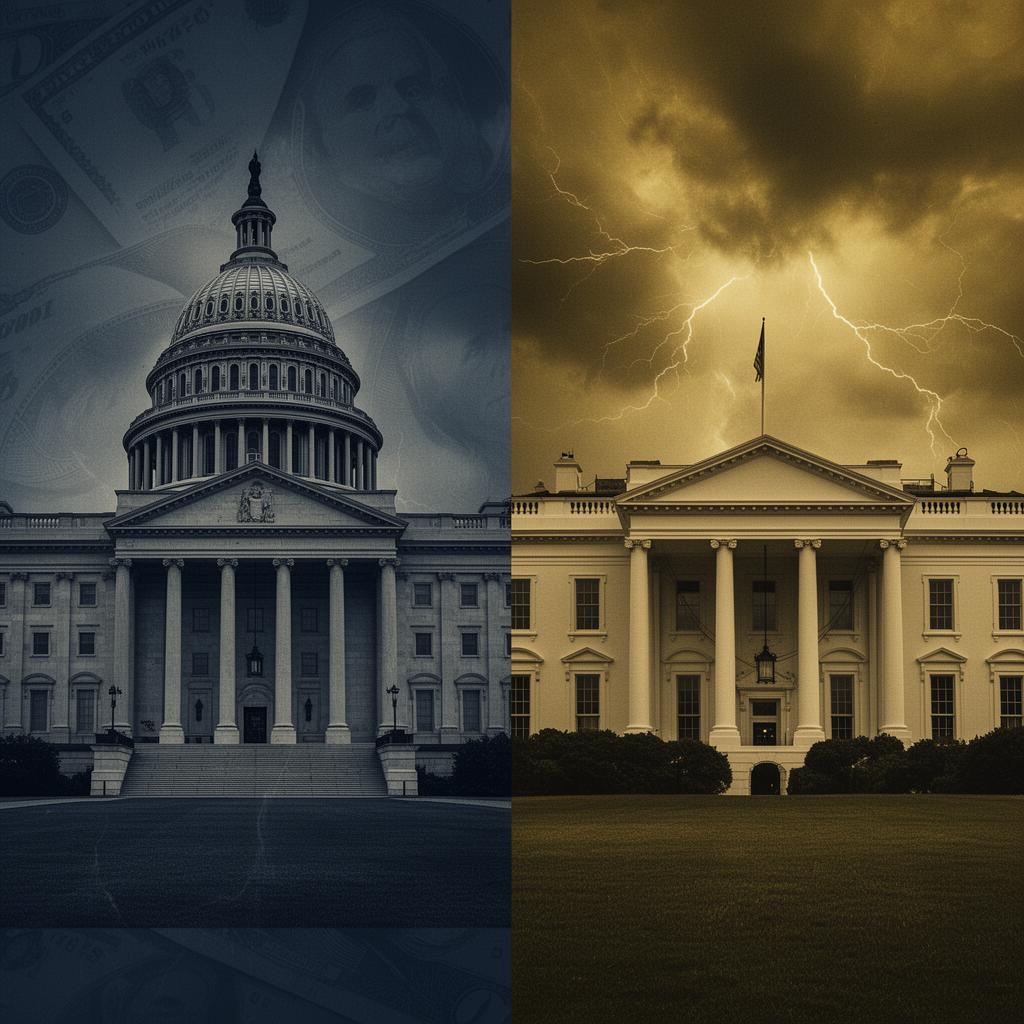
Why the US Left the Gold Standard in 1971

Key Takeaways
- 1The U.S. officially abandoned the gold standard in 1971, ending the dollar's direct convertibility to gold.
- 2This decision was driven by domestic spending on social programs and the Vietnam War, as well as foreign governments exchanging their dollar reserves for gold.
- 3The end of the gold standard led to the modern era of fiat currency, where money's value is determined by government policy rather than a physical commodity.
- 4Since 1971, the U.S. has experienced persistent inflation and a significant decline in the dollar's purchasing power.
- 5The move gave the Federal Reserve more flexibility in managing the economy but also concentrated control over monetary policy.
In August 1971, the United States made a monumental shift in its monetary policy that continues to shape the global economic landscape. President Richard Nixon announced the suspension of the U.S. dollar's convertibility into gold, effectively dismantling the gold standard that had been a cornerstone of the international financial system. This event, often called the "Nixon Shock," marked a new chapter in economic history, the effects of which are still debated and analyzed today.
Understanding the Gold Standard and Bretton Woods
Before 1971, the U.S. operated under a system that linked the value of its currency to a specific quantity of gold. This gold standard was designed to provide stability and instill confidence in the dollar, as it was backed by a tangible asset. Various forms of this system existed since the 19th century.
The arrangement was formalized on a global scale with the Bretton Woods Agreement of 1944. Under this system, many of the world's major currencies were pegged to the U.S. dollar, which in turn was convertible to gold at a fixed rate of $35 per ounce. The dollar became the world's reserve currency, and the U.S. held the majority of the world's gold reserves to back it up.
The Economic Pressures of the 1960s
By the late 1960s, the United States found itself in a precarious economic position. The government was financing extensive domestic spending through President Lyndon B. Johnson’s Great Society programs while simultaneously funding the costly Vietnam War. This led to substantial budget deficits and an increase in the supply of dollars circulating in the global economy.
As more dollars were printed to cover these expenses, foreign nations began to question the U.S. commitment to the $35-per-ounce price. Concerned about the dollar's stability, countries like France and Britain began to redeem their dollar holdings for physical gold from the U.S. Treasury. This outflow caused a significant drain on U.S. gold reserves, which were rapidly diminishing.
The "Nixon Shock" and the Dawn of Fiat Currency
Faced with shrinking gold reserves and mounting economic pressures, President Nixon took decisive action. On August 15, 1971, he announced that the U.S. would temporarily suspend the convertibility of the dollar into gold. This "temporary" measure became permanent, effectively ending the Bretton Woods system and the gold standard.
This decision ushered in the age of fiat currency. A fiat currency is money that a government has declared to be legal tender, but it is not backed by a physical commodity. Its value is based on the full faith and credit of the government that issues it and its management by a central bank. This gave the U.S. government unprecedented flexibility in its monetary policy, allowing it to control the money supply and adjust interest rates to manage economic cycles.
The Long-Term Consequences of a Fiat System
The transition to a fiat system had profound and lasting consequences. Without the discipline imposed by a gold backing, the U.S. government was free to finance expenditures by creating new money. This has contributed to a dramatic increase in the national debt over the past five decades.
A primary consequence has been a persistent decline in the dollar's purchasing power due to inflation. According to official government data, consumer prices have risen dramatically since the gold standard was abandoned. A basket of goods that cost $100 in 1971 would require over $730 to purchase today. Some analyses, such as those from Shadow Government Statistics which use older methodologies for calculating inflation, suggest the decline in purchasing power is even more severe.
Regardless of the specific measurement, the trend is clear: the dollar has steadily lost value, eroding the savings of citizens and particularly impacting those on fixed incomes. The shift also centralized significant economic power within the Federal Reserve, giving it broad authority to influence the economy, which also introduces the risk of policy errors and market distortions.
This article is for informational purposes only and is not intended as investment advice. The views and opinions expressed are those of the original author and do not necessarily reflect the official policy or position of our publication.
Found this article helpful?
Take Our 1-Minute Gold IRA Match Quiz
Get a personalized recommendation based on your goals and investment style.
Frequently Asked Questions
Explore Related Topics
For investors who don't have time to chase headlines.
Subscribe to The Precious Metals Report
Everything That Matters. Nothing That Doesn't.
No hype. No noise.
Just industry news — distilled into a short, scannable email.
✔ Price moves ✔ Market drivers ✔ Actionable insights

Vincent Edwards
Our editorial team covers market for Precious Metals Report, focused on clear, unbiased reporting and investor education.
Read more from this author